Ending April 3, 2026
Let's talk about hedging.
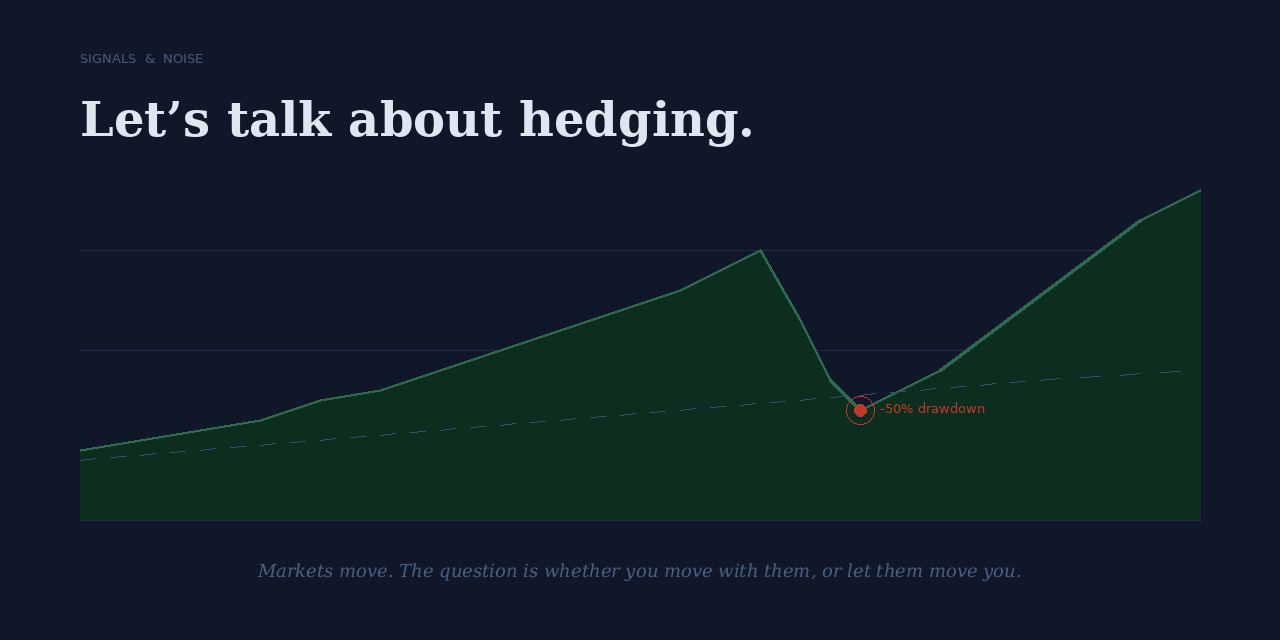
If you listen to the finance industry you should always focus on the long term (without saying why) and ignore short term fluctuations. But short term or current events can seriously impact your portfolio.
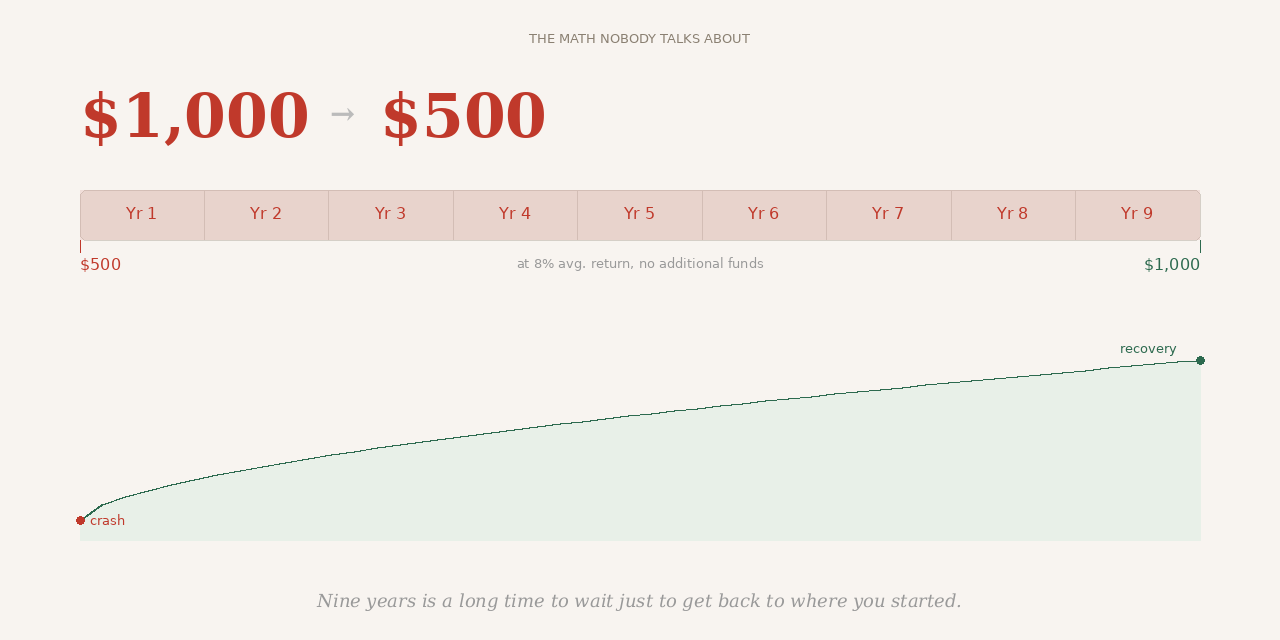
For example, let's say the markets falls around 50% which not uncommon. Every long term investor will experience a loss of 50% of their funds. Your $1,000 becomes $500. If we assume, as the industry does, that the average return is 8%, then without additional funds you wait 9 years before regaining your old amount. Not exactly great for your long term outcome.
If, as they say, "well the market's now cheap so put more in" this defeats their statements about the long term. If the market is cheap, then by all means put more in, but the inverse applies too - if the market is expensive take more out because there is a higher probability of a loss.
Or you can hedge. Sell some of your portfolio and hedge your portfolio for any bouts of extremem volatility.
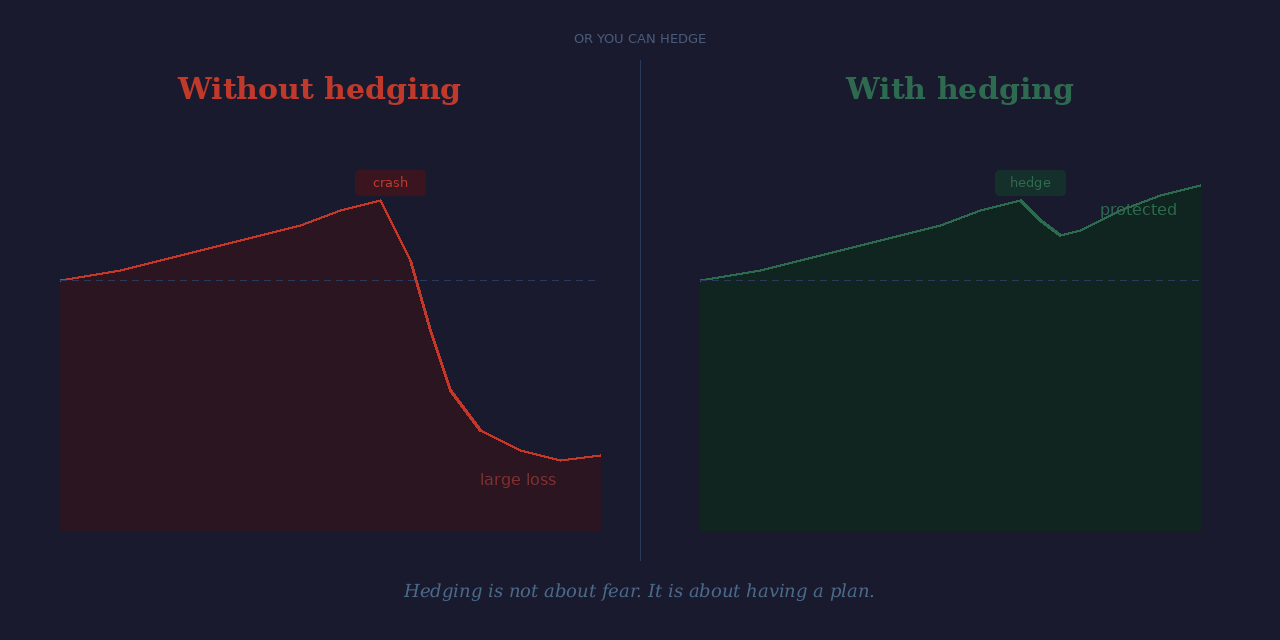
We are taught to believe that markets always go up and while that is generally true, it is not true for all markets or individual stocks. Given markets rise and fall, there is no reason not to learn about hedging because there will be periods in your investment journey where hedging will provide a way to either make additional profits or avoiding large losses.
This free Signals and Noise edition covers the key themes. Premium is where we expand on the broader context, valuation work, and portfolio thinking shaping how we are viewing markets in practice.
Sign up Below for $9.99 per week


Responses