Australia's Inflation Target Explained: What 2 to 3% Really Means
Sep 05, 2026
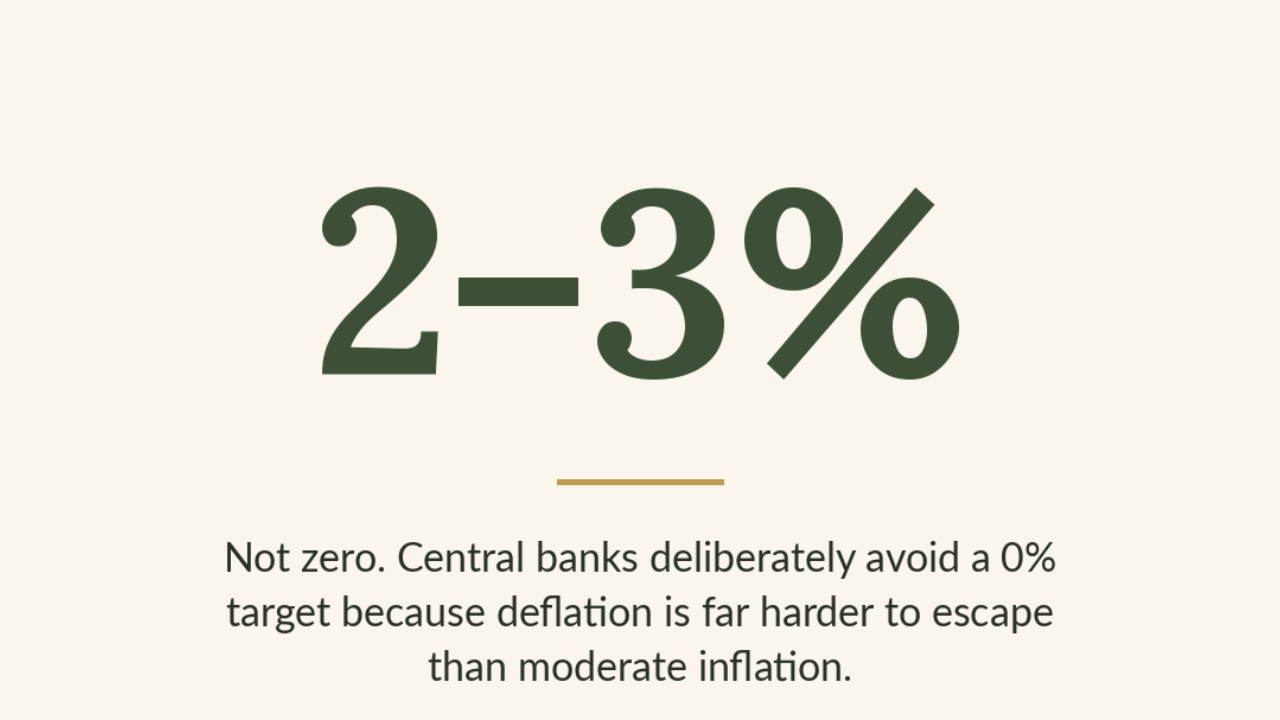
Most people assume the ideal inflation rate is zero. It is not. The Reserve Bank of Australia deliberately targets 2 to 3% a year, and understanding why that number was chosen, and why Australia has spent years outside it, helps explain a lot of what you are feeling in your household budget right now.
Why central banks avoid zero inflation
Zero sounds safe. In practice, it sits closer to the edge of a cliff.
Below zero, an economy risks slipping into deflation, where prices fall and keep falling. That sounds appealing until you think it through. If a loaf of bread will be cheaper next week, why buy it today? Extend that logic across an entire economy: buyers delay purchases, businesses cut prices and staff to compensate, incomes and spending fall further, and prices fall again. Deflation spirals are notoriously hard to break once they start, which is exactly why central banks steer well clear of them.
Above roughly 5%, inflation risks becoming self-reinforcing in the other direction: wages chase prices, prices chase wages, and expectations of further rises become part of the problem.
The 2 to 3% target sits deliberately in the middle. Moderate, predictable inflation keeps people spending rather than waiting, and it gradually erodes the real value of fixed debts over time. It is a target, not an accident.
Where Australia actually sits
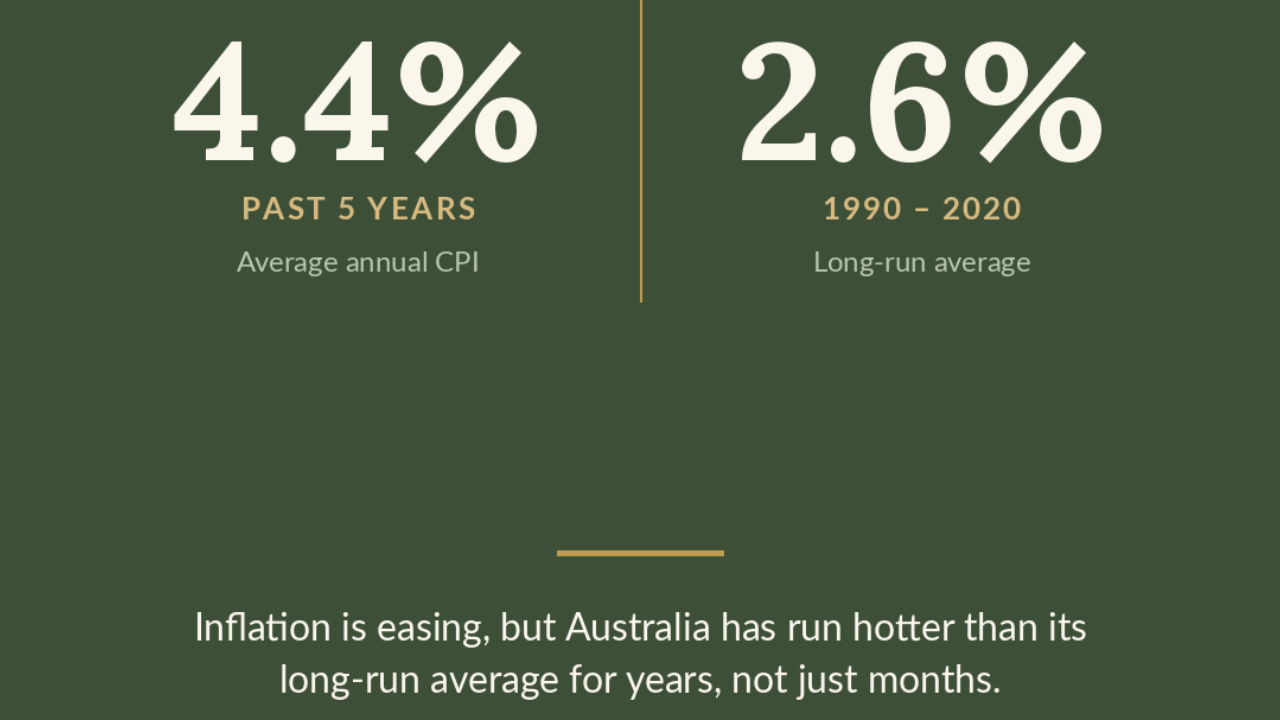
Australia has not been living in that middle band for a while. Headline CPI has averaged 4.4% a year over the past five years, well above the 2.6% average recorded between 1990 and 2020.
The most recent data shows the gap closing, slowly. Prices rose 3.5% in the 12 months to July 2026, down from 3.8% in June. The RBA's preferred measure, trimmed mean inflation, held at 3.6%. The cash rate has stayed at 4.35%, and the RBA's own guidance is that inflation is not expected to settle back into the middle of the 2 to 3% target range until early 2028.
In short: the direction is right, but the timeline is longer than most households would like.
What this looks like in a real budget
The Australian Bureau of Statistics reported household spending up 0.8% in June and 6.0% over the year, against inflation of 4.0% over the same period. Transport spending jumped 3.0% in a single month.
If it feels like you are spending less but the numbers on the page say otherwise, that is not a budgeting failure. The data backs up the gap between what things cost and what they used to cost.
Recurring costs deserve particular attention here. The average Australian household pays around $403 a quarter for electricity and $240 for gas. Neither number looks dramatic in isolation. Add insurance, subscriptions, and everything else that renews quietly in the background, and it is not surprising that 26% of households now name energy bills as a source of financial stress. It is rarely one large expense that blows out a budget. It is the slow accumulation of smaller, regular ones.
Why more people are budgeting for certainty, not restriction
A recent YouGov survey asked Australians why they budget at all. Building wealth was not the top answer. Covering essential expenses was, at 64%, followed by building savings (56%) and avoiding overspending (51%).
For most people, budgeting is not about restriction. It is about certainty in a period where the cost of everyday life keeps shifting. Interestingly, 45% of Australians still budget with a plain spreadsheet rather than an app. The tool matters far less than the habit of actually looking.
The takeaway
Inflation running above target is not a sign that something has broken. It is a sign the RBA's job is not finished yet. Understanding the target, and where the economy actually sits against it, gives you a clearer read on your own budget than the headlines alone.
This is general information to help you understand the numbers behind the cost of living conversation. It is not a substitute for looking at your own numbers, and it is not personal advice.
This newsletter is for informational purposes only and does not constitute financial advice. Total Money Management | AFSL 568642.
Enjoying our blog?
Join Signals & Noise, our free weekly newsletter, and stay sharp on the markets and sectors we're tracking.
This newsletter is for informational purposes only and does not constitute financial advice. Total Money Management | AFSL 568642.
Stay connected to our blog
Join our mailing list to receive the latest news and updates from our team including blogs, live events, podcast releases and stocks to watch.
Your information will not be shared.
We hate SPAM. We will never sell your information, for any reason.
